Vinyl is the whole business. Fencing is the bulk of it, and we build everything else that comes out of the same material and the same crew. Below is what we install, what it is generally used for, and what to expect on the estimate.
Compare Styles Before You Decide
How much screening do you want? Which finish works with your home? Our vinyl fence style guide brings privacy, semi-privacy, picket, and ranch rail designs together with gate planning and practical questions to ask before an estimate.
Privacy Fence
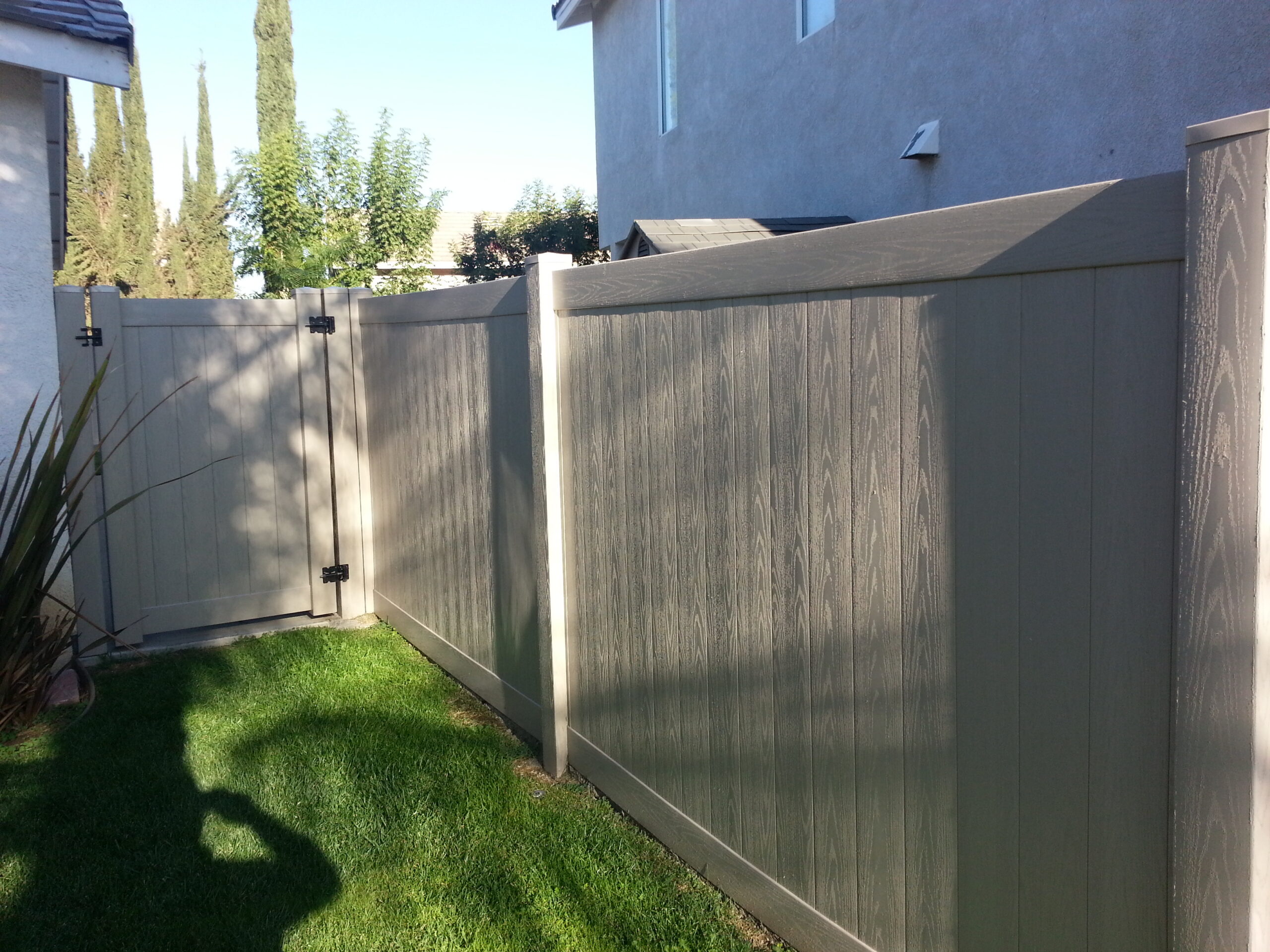
Solid tongue-and-groove panels in six or eight foot heights. This is the workhorse for backyards, pool codes, spa enclosures and shared property lines where you want the noise and the neighbors dialed down. Available flat-top, scalloped, or with a lattice or picket accent along the top rail if you want light through the upper foot.
Typical use: rear and side yards, pool barriers, trash and equipment screens.
Picket and Yard Fence
Three to four foot tall open-picket runs for front yards and garden beds. Keeps dogs and kids contained without walling off the curb. Straight-top, scalloped or arched sections, with picket spacing set to your local code if you are enclosing a pool-adjacent area.
Typical use: front yards, side gates, garden and planter borders.
Ranch Rail
Two, three and four rail post-and-rail for acreage, horse property, driveways and long frontage runs. Can be run with welded wire or mesh backing when you need to contain smaller animals without losing the open look.
Typical use: large lots, paddocks, driveway framing, property boundaries.
Gates
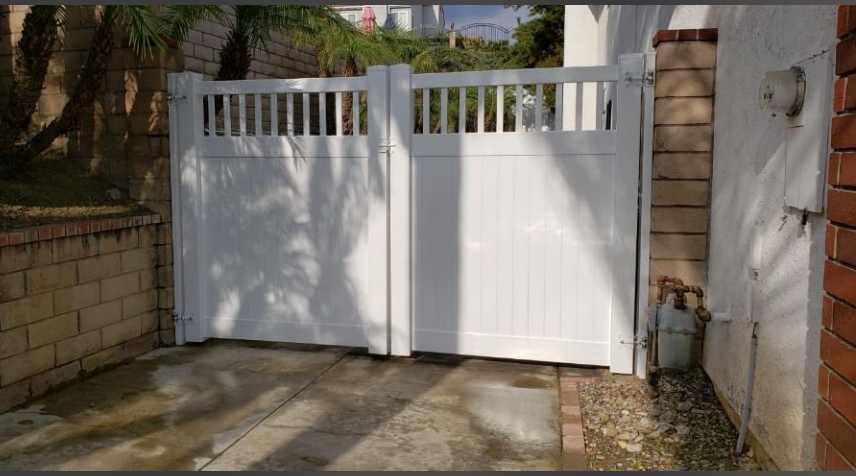
Single walk gates, double drive gates and pool-code gates with self-closing hinges and self-latching hardware. Every gate we hang gets a galvanized or steel-reinforced post inside the vinyl, because an unreinforced vinyl gate sags and that is the number one callback in this trade.
Repairs and Section Replacement
Car backed into a panel, a post snapped in a windstorm, a gate that will not latch anymore. We match the profile and color where we can and replace only what is damaged. If the existing fence is an off-brand profile no longer in production, we will tell you that up front rather than guess.
Tear-Out and Haul-Away
Old wood fence coming down before the new one goes up? We pull it, break out the old footings and haul it off. It gets quoted as a line item so you can see exactly what that portion costs.
Patio Covers
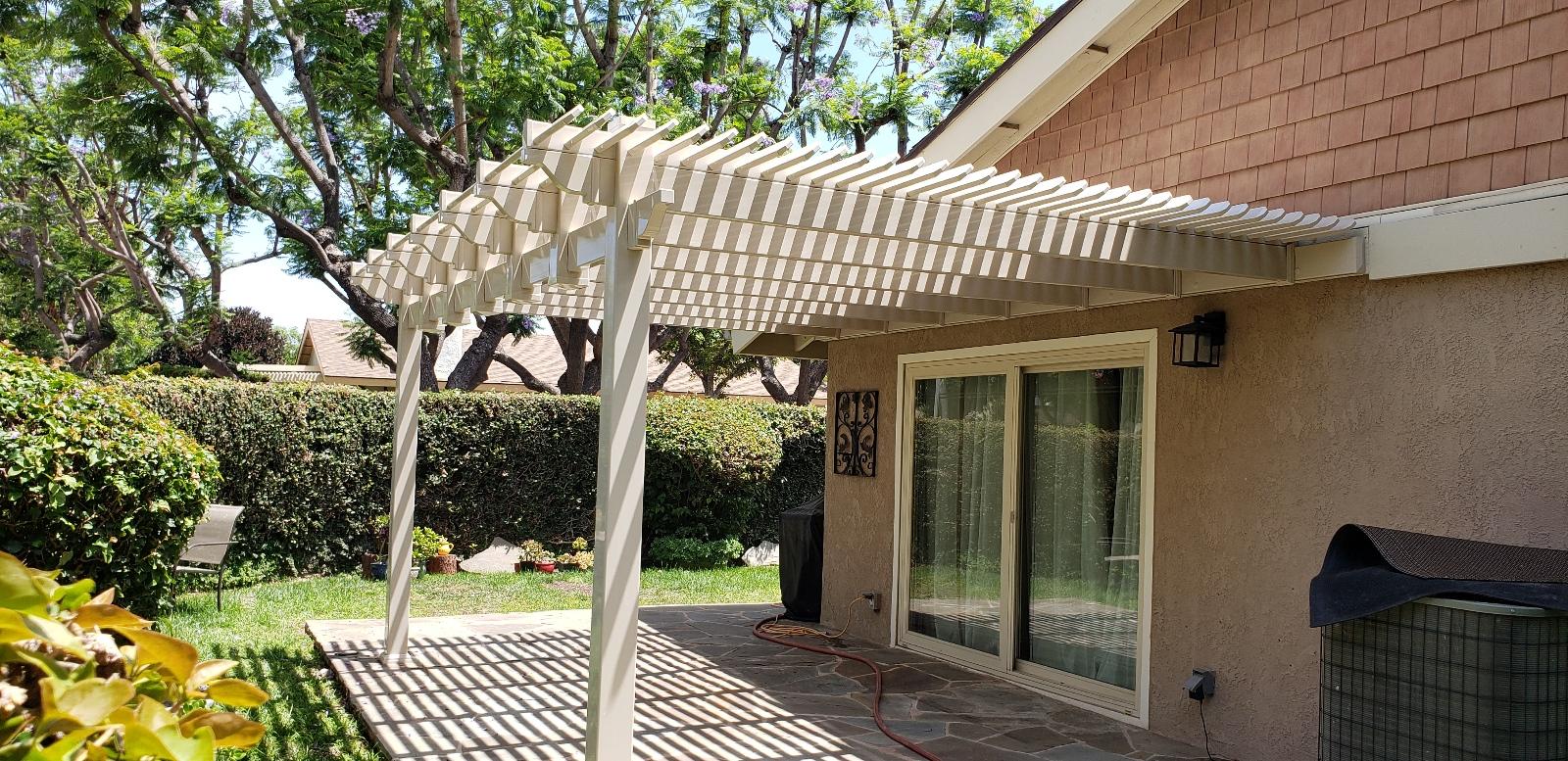
Solid and louvered vinyl patio covers, attached to the house or freestanding. Same material as the fence, so it does not need painting and it does not warp in the summer. Louvered tops let you open them up for light or close them down for shade.
Typical use: back patios, outdoor kitchens, shaded seating off the slider.
Arbors and Shade Structures
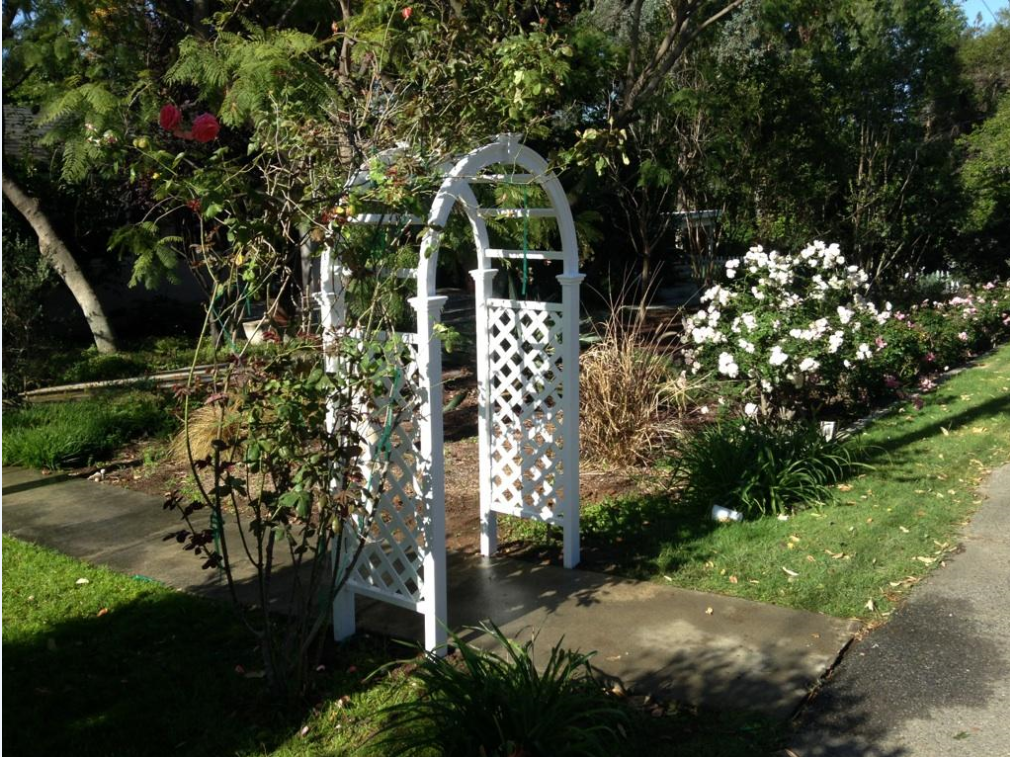
Vinyl arbors over a gate, a walkway or a seating area, built to match the fence line they sit in. Good for breaking up a long run of fence and giving an entry some definition.
Typical use: garden entries, gate features, patio corners.
Porch and Deck Railing
Vinyl railing for porches, steps, decks and raised landings, built to code height with the picket spacing your inspector wants to see. Matches the fence so the whole property reads as one job instead of three.
Typical use: front porches, deck perimeters, stair runs.
Wall Toppers
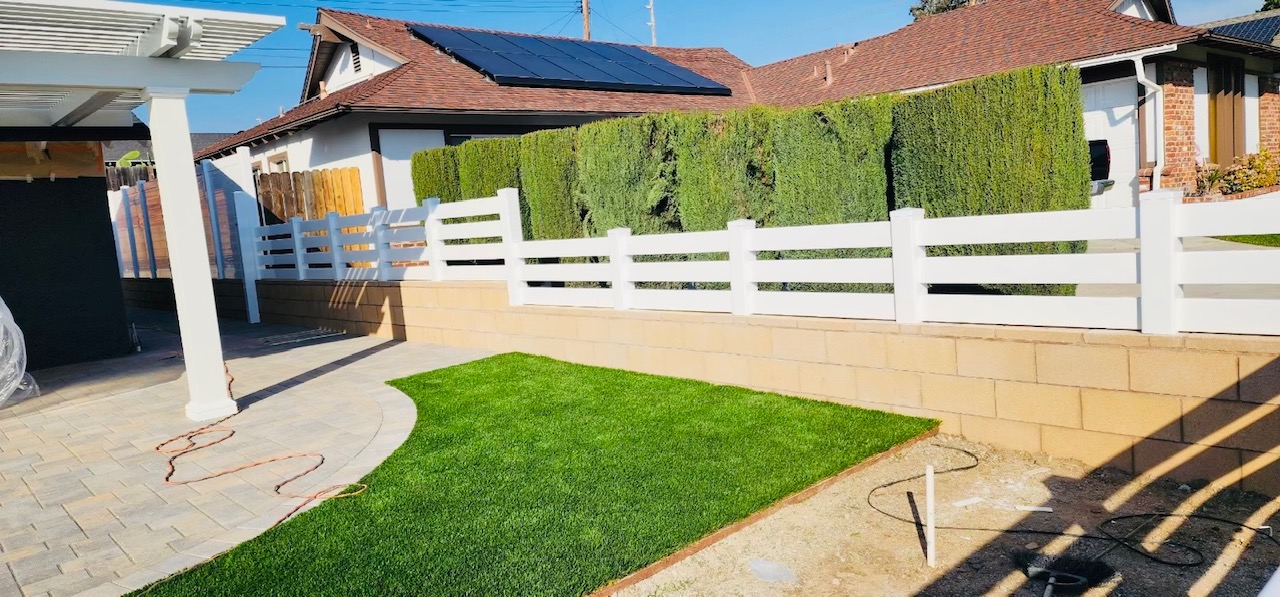
Vinyl fence set on top of an existing block wall to buy back height and privacy without tearing the wall out. Ranch rail, closed picket or solid panel, cored and anchored into the block.
Typical use: raising a short block wall, adding privacy between neighbors, finishing a tract wall.
Pool Enclosures
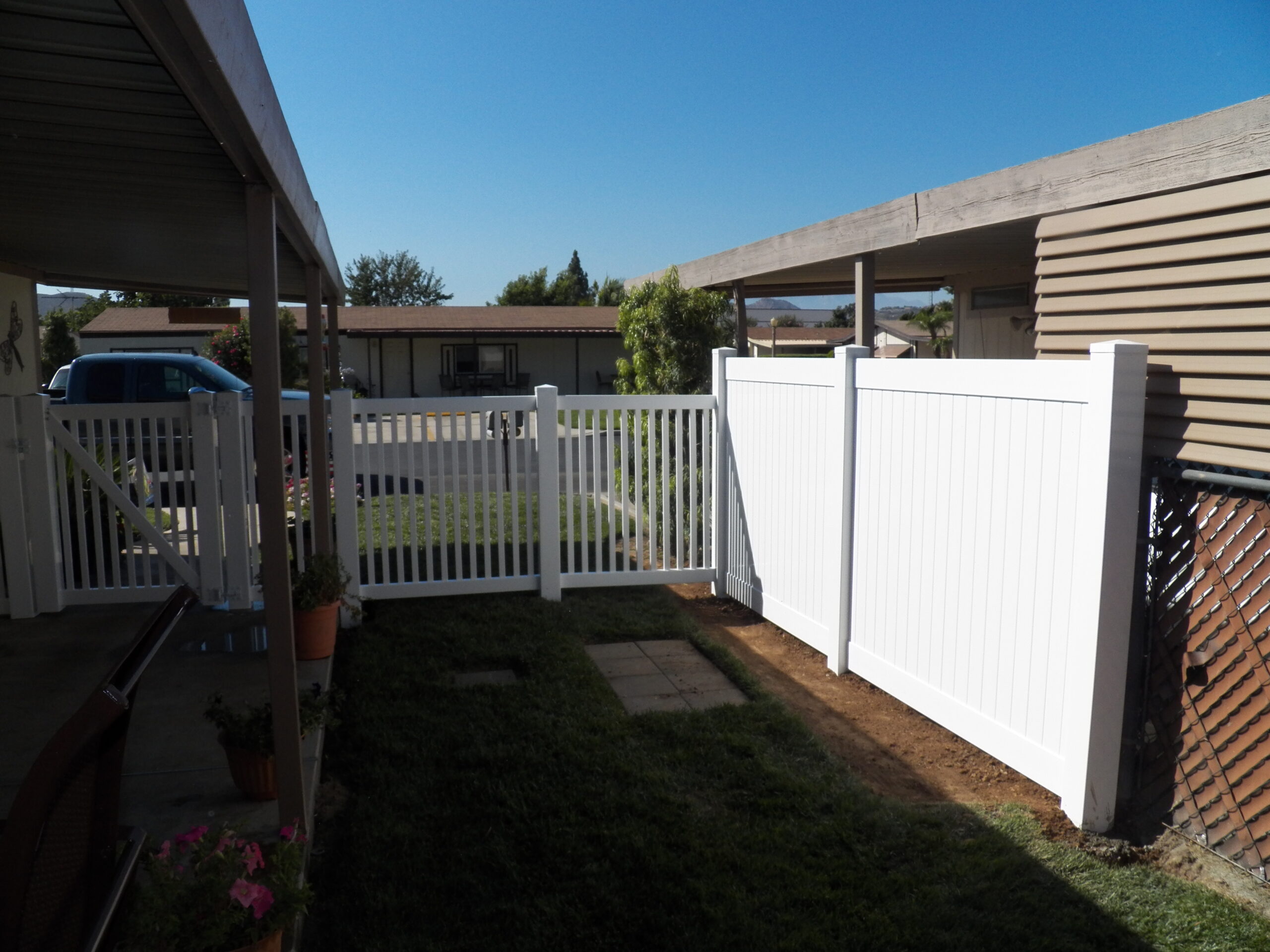
Pool barrier fencing built to the height, spacing and gate hardware your local code requires, in solid privacy or open picket. Gates get self-closing hinges and self-latching hardware so it passes inspection the first time.
Typical use: pool and spa enclosures, equipment screening.
What We Do Not Do
Wood, chain link, wrought iron and new block wall. Sticking to one material is why our crews are fast and our estimates are accurate.
Common Questions
How long does a fence take to install?
Most residential runs go up in one to two days once the posts are set. Larger properties, tear-outs and patio covers take longer, and we will tell you the schedule when we hand you the estimate.
What colors does vinyl come in?
White, tan, adobe, gray, and wood grain finishes that read like cedar from the curb. The color runs through the material rather than sitting on top, so a scratch does not show a different color underneath.
Does vinyl fence turn yellow?
Not the grade we install. Heavy-gauge vinyl with UV inhibitors holds its color in Inland Empire sun. The thin big-box panels are the ones that chalk and yellow, and that is one of the reasons we do not sell them.
Can you match my neighbor’s existing fence?
Often yes. Bring us a photo and a close-up of the post cap and we will tell you whether the profile is still made. If it is an off-brand that has been discontinued, we will say so up front instead of guessing.
Do I need a permit?
It depends on your city and the height. Most standard residential fence heights do not, pool barriers usually do, and HOA approval is its own separate step. Check with your city and your HOA before we dig.
How much does a vinyl fence cost?
It comes down to linear footage, height, style and how many gates. We do not quote off a photo or a phone call. We come measure, look at the grade, and hand you a flat written number with the material and gate count spelled out.